
Manufacturing Expense Management Software — Free Trial
Tag expenses by project and team. Sync with QuickBooks, Xero, and Sage Intacct. Approve from your phone in 8 seconds.
Manufacturing teams lose 4+ hours per week to manual expense reports. Incurdesk allocates expenses by plant and line, tracks BoM components, and integrates with SAP and Oracle.

Manufacturing expense management is the systematic process of identifying, measuring, controlling, and optimizing the costs associated with producing a company's goods, encompassing both direct production costs and indirect overhead expenses. Effective manufacturing expense management ensures resource efficiency, reduces waste, and enhances profitability by providing a clear financial visibility into the production process.
This guide outlines a structured approach to manufacturing expense management, covering four key areas: (1) categorizing and benchmarking manufacturing costs (direct, indirect, fixed, variable), (2) selecting and implementing appropriate expense tracking and management software, (3) establishing effective expense tracking and analysis procedures, and (4) applying optimization strategies to reduce costs without compromising product quality or production capacity.
What You'll Need Before You Start
Effective manufacturing expense management begins with gathering essential resources and ensuring the right access, so take a moment to assemble the following before diving in.
Data and Access Prerequisites
- Historical Production Costs Records: Detailed logs of material, labor, and overhead costs for at least the last two fiscal years.
- Current Supply Chain Contracts: All active agreements with suppliers, including pricing terms and contract end dates.
- Factory Floor Layout and Equipment Logs: Documentation of facility setup and equipment maintenance, operational costs, and depreciation schedules.
- Access to Enterprise Resource Planning (ERP) System: Credentials for the system managing your manufacturing operations, if applicable.
Tools and Team Requirements
- Cost Accounting Software (or a spreadsheet tool like Microsoft Excel or Google Sheets with advanced user proficiency).
- A Dedicated Expense Management Team or a single point of contact with cross-functional knowledge (Finance, Operations, Procurement).
- Data Analysis and Visualization Tools (e.g., Tableau, Power BI) for insightful reporting.
- Communication Plan for stakeholders, including regular update schedules and feedback mechanisms.
Pro Tip: Utilize your ERP system's (if available) built-in reporting features to auto-generate a baseline of your current expense structure, saving time in the initial assessment phase.
Step 1: Understand and Categorize Manufacturing Expenses
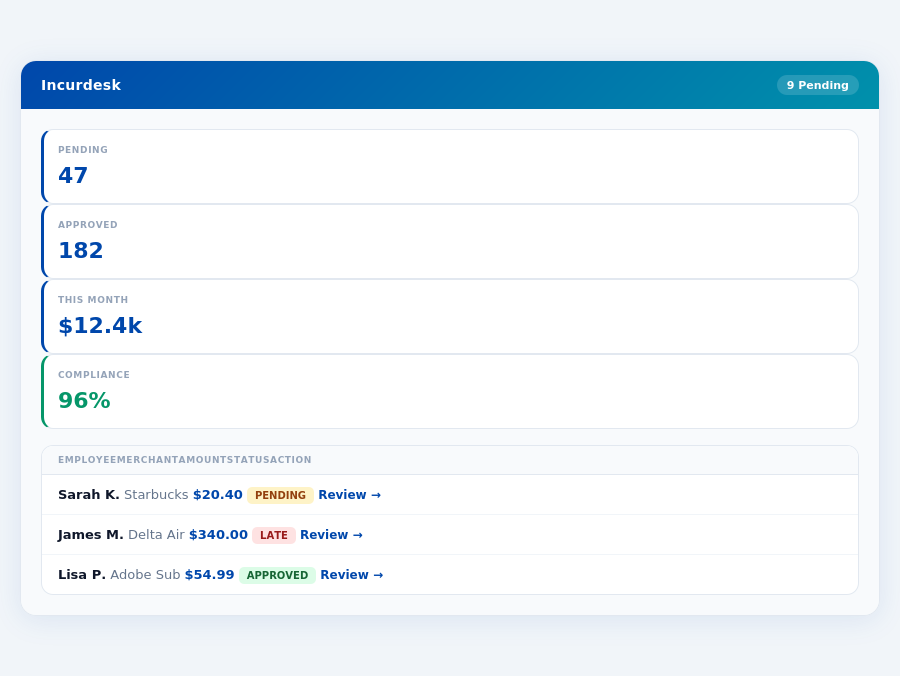
Accurately categorizing manufacturing expenses is crucial for effective expense management, as it directly impacts Cost of Goods Sold (COGS) and ultimately, profitability. The key concept here is Absorption Costing, which requires allocating all manufacturing costs to the product.
Breaking Down Manufacturing Expenses by Type
Manufacturing expenses can be broadly categorized into Direct Material Costs, Direct Labor, and Manufacturing Overhead. Direct Material Costs include the expenses of materials directly used in the production process, while Direct Labor refers to the wages of production staff. Manufacturing Overhead encompasses all other factory expenses. These costs can further be classified into Fixed Costs (e.g., rent) and Variable Costs (e.g., utility bills that fluctuate with production levels). According to GAAP [1], these distinctions are critical for accurate financial reporting.
Target Costing often guides the management of these expenses, aiming to produce at a predetermined cost. In contrast, Activity-Based Costing (ABC) and Process Costing are methods used to allocate costs more accurately to products or processes, especially in environments with diverse production lines. Meanwhile, Variable Costing focuses only on variable costs for product costing, which can simplify decision-making in certain manufacturing contexts.
Understanding these categories also influences Inventory Valuation, as the method of costing (absorption vs. variable) affects the value of inventory on the balance sheet. Incorrect categorization can lead to misallocation of costs, impacting Operating Expenses (OpEx) analysis and strategic decisions.
| Category | Examples | Type |
|---|---|---|
| Direct Material Costs | Raw Materials, Components | Variable |
| Direct Labor | Production Line Workers' Wages | Variable |
| Manufacturing Overhead | Factory Rent, Utilities, Insurance | Mixed (Fixed & Variable) |
| Fixed Costs | Lease on Manufacturing Equipment | Fixed |
| Variable Costs | Electricity for Production | Variable |
A key insight in managing these expenses is recognizing how COGS is directly influenced by the accuracy of expense categorization, which in turn affects profitability margins. As highlighted by a study on manufacturing cost control [2], companies that effectively manage and allocate their manufacturing overhead see a significant reduction in COGS and an increase in competitiveness.
Pro Tip: Regularly review your Manufacturing Overhead allocation method to ensure it accurately reflects the consumption of resources by different products, adjusting for inefficiencies or changes in production processes.
Step 2: Establish Clear Expense Policies and Internal Controls
This step is crucial because well-defined expense management policies and internal controls are the cornerstone of effective expense management, ensuring alignment with Company policies and Compliance regulations. The key concept here is Financial Governance, which dictates how financial decisions are made and executed within the manufacturing organization.
Defining Expense Boundaries and Approval Mechanisms
To establish clear expense policies, manufacturers must first outline Spending limits for different employee roles and departments. These limits should be integrated into Approval hierarchies and Approval workflows to ensure that all expenses are vetted appropriately before approval. For instance, a production manager's spending limit might be set at $5,000 for equipment maintenance, requiring approval from the department head for amounts exceeding this threshold. Compliance with regulations such as the Sarbanes-Oxley Act [3] is also vital, as it mandates strict financial reporting and internal control measures.
Internal controls are pivotal in preventing misuse of company funds. Implementing a system that automatically checks expenses against predefined Spending limits and routes them through the appropriate Approval workflows can significantly reduce irregularities. Moreover, maintaining a detailed Audit trail for all transactions is not just good practice but often legally required, facilitating transparency and accountability.
Regular Employee training programs should also be conducted to ensure that all staff understand the Company policies regarding expenses, the importance of Compliance regulations, and how to navigate the Approval hierarchies effectively. This reduces errors and non-compliant spending.
| Category | Examples | Type |
|---|---|---|
| Spending Limits by Department | Production, R&D, Administration | Variable |
| Approval Hierarchies | Department Head → Director → CFO | Fixed |
| Internal Controls Measures | Audit Software, Expense Reporting Tools | Fixed |
| Compliance Regulations Training | Sarbanes-Oxley Act, Industry-Specific Regulations | Fixed |
| Employee Training Programs | Quarterly Expense Management Workshops | Variable |
A key qualitative insight from effective manufacturing expense management is that the clarity and enforceability of Approval workflows directly impact the efficiency of expense processing. Companies with well-defined and consistently applied workflows experience fewer delays and less overhead in their expense approval processes, as noted in a study on financial governance in manufacturing [4].
Pro Tip: Implement a "Zero-Tolerance" policy for non-compliant expenses by automatically flagging and rejecting submissions that bypass Approval hierarchies or exceed Spending limits, and use the Audit trail to identify and address patterns of non-compliance through targeted Employee training programs.
Step 3: Implement Expense Tracking and Management Systems
Effective expense management is crucial for manufacturing firms to maintain profitability and comply with financial regulations. The key concept here is Real-time Tracking of expenses, enabling timely decision-making and reducing financial risks.
Streamlining with Technology: From Scanning to Integration
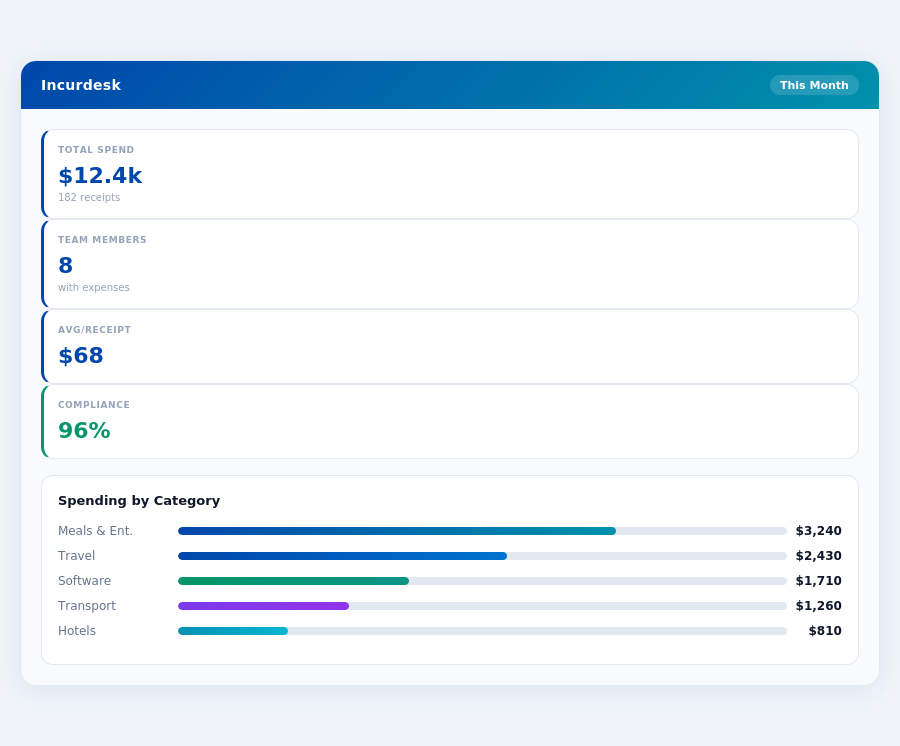
To achieve real-time tracking, implementing Expense Management Software is essential. This software often features Automated Expense Reports, Receipt Scanning powered by OCR (Optical Character Recognition) Technology, which accurately digitizes paper receipts, reducing manual entry errors and saving time. For instance, when a manufacturing employee submits a receipt for a business lunch, the OCR technology extracts relevant details (date, amount, category) and auto-populates the expense report, streamlining the process.
Integration with Accounting Systems (such as QuickBooks, Xero, NetSuite, SAP, Oracle, Sage Intacct, Workday) ensures smooth data transfer, minimizing errors and enhancing financial transparency. Furthermore, ERP Integration allows for a unified view of operational and financial data, facilitating more informed decision-making. Manufacturers can also use Mobile Apps for on-the-go expense tracking, making it easier for employees to submit expenses promptly.
Compliance with regulations like the Sarbanes-Oxley Act (SOX) [5] is also facilitated through auditable trails provided by these systems, ensuring that expense management practices are transparent and compliant.
| Category | Examples | Type |
|---|---|---|
| Expense Categorization - Travel | Airfare, Hotel Stays, Meals | Variable |
| Manufacturing Supplies | Raw Materials, Equipment Maintenance | Fixed/Variable |
| Employee Expenses | Client Entertainment, Training Courses | Variable |
| Facility Overheads | Rent, Utilities | Fixed |
| Research & Development | Prototype Costs, Patent Fees | Variable |
A key insight from implementing such systems is the ability to pinpoint areas of inefficiency through detailed Expense Categorization. For example, if travel expenses are consistently high, the company might negotiate better rates with preferred hotels or airlines. As noted by financial analysts, "Real-time expense tracking can reduce approval times by up to 50%" [6], significantly improving operational efficiency.
Pro Tip: Utilize the Mobile Apps of your expense management software to encourage immediate Receipt Scanning by employees, reducing lost receipts and delaying expense reporting.

Step 4: Optimize Costs and Improve Efficiency
This step is crucial because effective Cost control is the backbone of sustainable manufacturing. By optimizing costs and enhancing efficiency, manufacturers can significantly improve their bottom line. The key concept here is Budgeting that is informed by Data-driven decisions.
Streamlining Operations through Integrated Management Practices
To achieve optimal cost management, it's essential to integrate several key practices. Supply chain management and Vendor management should be aligned to reduce procurement costs and lead times. Meanwhile, Inventory management strategies can help minimize holding costs and reduce waste. Implementing Energy efficiency measures not only contributes to sustainability goals but also lowers operational expenses.
Process management plays a critical role in identifying bottlenecks and areas for Automation, which can drastically reduce labor costs and increase productivity. Coupled with effective Workforce management, these efforts can lead to a more streamlined and efficient operation. Regular Margin analysis and Constraint analysis are vital for understanding the financial impact of these optimizations and for identifying the next steps in the improvement process.
Further, embracing Waste reduction initiatives, such as those outlined in the ISO 14001 standard for environmental management systems [7], can lead to significant cost savings and enhanced brand reputation.
| Category | Examples | Type |
|---|---|---|
| Supply Chain & Vendor Management | Supplier consolidation, Just-In-Time (JIT) delivery | Variable |
| Inventory Management | Lean inventory practices, Safety stock optimization | Fixed/Variable |
| Energy & Process Efficiency | LED lighting, Process automation tools | Fixed |
| Workforce & Waste Management | Cross-training programs, Recycling initiatives | Variable |
| Technology & Automation | Robotic assembly lines, Predictive maintenance software | Fixed |
A key insight from practitioners is that the most effective cost optimizations are those that are continuously monitored and adjusted based on Data-driven decisions. As noted by a study in the Journal of Manufacturing Systems, "real-time data analysis can reduce production costs by up to 15%" [8].
Pro Tip: Implement a Constraint analysis at least quarterly to identify and address the most limiting factors in your production process, ensuring that Automation and Process management efforts are targeted for maximum impact.
Step 5: Ensure Compliance and Risk Management
This step is crucial because non-compliance with regulatory requirements can lead to significant fines, reputational damage, and operational disruptions. The key concept here is Regulatory Compliance, ensuring adherence to all relevant laws, regulations, and standards.
Navigating Regulatory Landscape for Manufacturing
Manufacturing facilities must comply with a myriad of Tax regulations, Financial regulations, and Regulatory compliance costs associated with environmental and safety standards. For instance, compliance with the EPA's (Environmental Protection Agency) regulations on emissions and waste management, alongside OSHA's (Occupational Safety and Health Administration) workplace safety standards, is mandatory. Failure to comply can result in audits by Government agencies, leading to potential Audits and hefty fines.
A critical aspect of this step involves Risk management, identifying potential compliance risks and mitigating them through Policy enforcement and Fraud prevention measures. This proactive approach helps in avoiding the costs associated with non-compliance. For example, adhering to ISO 14001:2015 [9], an international standard for environmental management systems, can streamline compliance processes and reduce regulatory compliance costs.
Effective compliance also involves regular internal Audits to ensure that all operations are in line with the set Policy enforcement guidelines, thereby enhancing Fraud prevention and reducing the likelihood of external regulatory audits leading to fines.
| Category | Examples | Type |
|---|---|---|
| Environmental Compliance | EPA Regulations on Emissions | Fixed (Regulatory) |
| Safety Compliance | OSHA Workplace Safety Standards | Variable (Dependent on Facility Size) |
| Tax Compliance | Annual Tax Filings | Fixed (Annual) |
| Risk Management | Internal Audits for Policy Enforcement | Variable (Dependent on Risk Level) |
| Fraud Prevention | Regular Financial Statement Audits | Fixed (Quarterly/Annually) |
A key insight from practitioners is that integrating compliance into the core of operational processes, rather than treating it as an add-on, significantly reduces Regulatory compliance costs and enhances overall Risk management. This approach also facilitates smoother interactions with Government agencies during audits. As noted by a study on manufacturing compliance [10], proactive integration of regulatory standards into production planning can reduce compliance costs by up to 30%.
Pro Tip: Implement a Compliance Officer role that oversees all regulatory matters, ensuring a single point of accountability for Policy enforcement, Fraud prevention, and coordination with Government agencies during audits.

Common Mistakes to Avoid in Manufacturing Expense Management
Effective expense management is crucial for the profitability and competitiveness of manufacturing operations, yet several common pitfalls can undermine even the best-intentioned strategies.
- Overlooking Indirect Costs: Failing to account for all indirect costs, such as utility bills, maintenance, and overheads, can lead to inaccurate expense reporting and poor budgeting decisions.
- Inadequate Supply Chain Visibility: Poor visibility into supply chain costs can result in overpayment for materials, shipping, and inventory holding, significantly impacting the bottom line.
- Insufficient Preventive Maintenance Scheduling: Neglecting regular equipment maintenance can lead to unexpected downtime, emergency repairs, and increased operational expenses.
- Mismanaged Inventory Levels: Holding too much inventory can tie up capital in storage and obsolete goods, while too little can lead to stockouts and expedited shipping costs.
- Not Implementing Real-Time Expense Tracking: Relying on manual or periodic expense tracking can delay identification of cost anomalies, preventing timely corrective actions and leading to potential financial losses.
What This Guide Does Not Cover
This guide focuses on operational expense management for Manufacturing organizations. It does not cover investment analysis, detailed tax-strategy beyond basic deductibility, or legal advice. For specifics, consult a qualified accountant or attorney familiar with your jurisdiction and Manufacturing regulations.
Conclusion
Implementing effective expense management in manufacturing requires a disciplined approach. The key steps outlined in this guide - from categorizing expenses and setting budgets, to monitoring variances and optimizing resource allocation - are not one-time tasks, but rather ongoing disciplines. Consistently applying these principles will help manufacturing organizations maintain control over their expenses, adapt to changes, and drive long-term sustainability.
For manufacturers seeking to streamline this process, using technology is crucial. Incurdesk automates the tracking and management of manufacturing expenses, providing real-time visibility and enabling data-driven decisions. By integrating such tools into their expense management strategy, manufacturers can enhance operational efficiency, reduce costs, and focus on growth.
Sources & References
- Manufacturing — National Institute of Standards and Technology (NIST)
- Small Business Administration (SBA) — U.S. Small Business Administration
- Guide to Business Expense Resources — Internal Revenue Service (IRS)
- Certifications & Credentials (APICS) — Association for Supply Chain Management (ASCM)
- Institute for Supply Management (ISM) — Institute for Supply Management (ISM)
- Operational Excellence — National Association of Manufacturers (NAM)
- Smart Manufacturing Solutions — Deloitte
- Manufacturing Industry — KPMG
- Explore.Expense – AI Expense Monitoring — PwC
- IndustryWeek — IndustryWeek
What constitutes a direct manufacturing cost, and how is it differentiated from indirect costs?
How often should manufacturing expense reports be reviewed for accuracy and compliance?
What role does depreciation play in manufacturing expense management, and how is it calculated?
Can Incurdesk integrate with existing ERP systems for streamlined expense tracking?
How are inventory holding costs typically calculated in manufacturing expense management?
What distinguishes capital expenditures (CapEx) from operational expenses (OpEx) in manufacturing?
Are there specific regulatory requirements for expense reporting in manufacturing, such as for tax purposes?
How can manufacturing firms leverage expense-management tools to reduce waste and optimize costs?
Find guides tailored to your team and location.
Ready to manage expenses like a pro?
30-day free trial · No credit card · Setup in 15 minutes