
Nonprofits Expense Management for Under $10/User (2026)
Tag expenses by project and team. Sync with QuickBooks, Xero, and Sage Intacct. Approve from your phone in 8 seconds.
Nonprofits lose 4+ hours per week to manual expense reports. Incurdesk tracks grants and funds separately, supports Form 990 reporting, and integrates with Salesforce NPSP and Blackbaud.

Non-profits expense management is the systematic process of planning, monitoring, and controlling organizational expenditures to ensure alignment with charitable missions while maintaining financial sustainability. It involves optimizing resource allocation, reducing unnecessary costs, and ensuring compliance with regulatory requirements.
This guide outlines a structured approach to non-profits expense management, covering four key areas: (1) categorizing and coding expenses for clarity and reporting, (2) selecting and implementing suitable expense management software, (3) effectively tracking and reconciling expenses, and (4) analyzing data to optimize expense structures and improve financial efficiency.
What You'll Need Before You Start
To effectively manage your non-profit's expenses, gather the following essential elements to ensure a smooth and successful implementation of your expense management strategy.
Data and Access Prerequisites
- Current Financial Statements: Most recent balance sheet, income statement, and cash flow statement to understand your financial standing.
- Expense Records (Last 12 Months): Detailed, categorized records of all expenses to identify trends and areas for optimization.
- Vendor and Contractor Lists: Comprehensive lists including contact information, contract terms, and payment schedules.
- Access to Accounting Software: Login credentials for your current accounting system (e.g., QuickBooks, Xero, etc.) for integration and data migration purposes.
Tools and Team Requirements
- Expense Management Software: Selected platform (e.g., Expensify, Concur) aligned with your non-profit's specific needs.
- Dedicated Finance Team Member: Point person for overseeing the expense management process and troubleshooting.
- Basic Accounting Software Knowledge: Team familiarity with your chosen accounting and expense management tools.
- Budgeting Template: Customizable template tailored to non-profit financial reporting needs.
Pro Tip: Utilize the 80/20 Rule in your initial setup: Focus on the 20% of expenses that account for 80% of your outlays to quickly realize significant management benefits and efficiency gains.
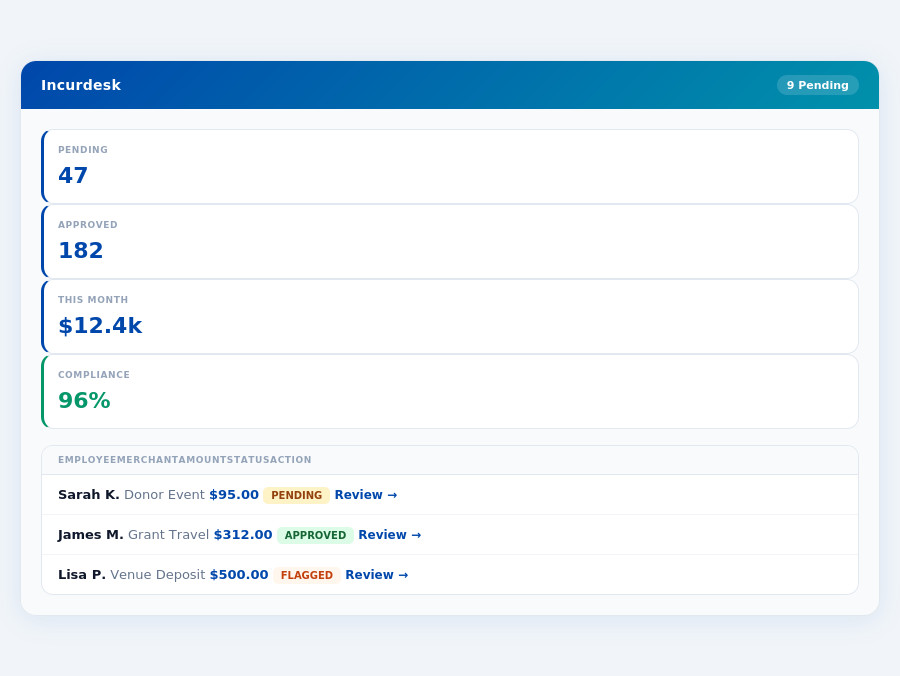
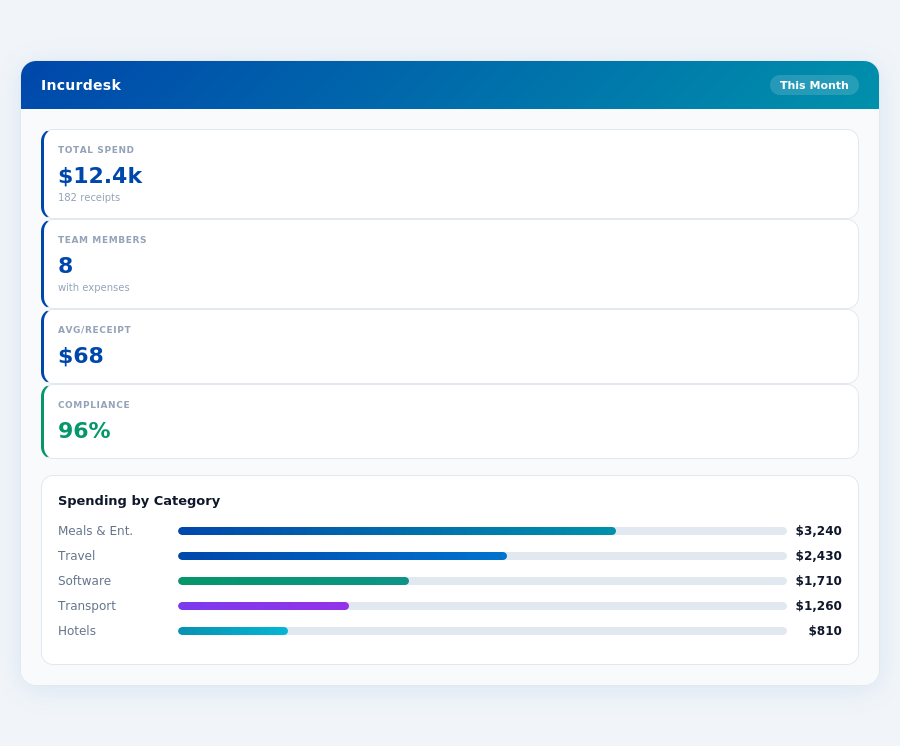
Step 4: Ensure Strong Expense Tracking and Functional Reporting
This step is crucial because accurate expense tracking enables effective Functional Expense Reporting, which is essential for transparency and donor trust. By categorizing expenses into Program Services, Management & General Expenses, and Fundraising Expenses, nonprofits can provide a clear picture of how resources are allocated.
Implementing Effective Expense Categorization and Audit Trails
To achieve strong expense tracking, nonprofits must adopt a thorough Expense Categorization system. This involves not only assigning expenses to the correct functional area (e.g., Program Services for direct program costs) but also ensuring that each transaction has a clear Audit Trail. This includes maintaining detailed Documentation Requirements for every expense, from receipts for small purchases to contracts for larger services. Compliance with GAAP (Generally Accepted Accounting Principles) [7] is essential for the credibility of these reports.
A key challenge in Expense Categorization is accurately distinguishing between Management & General Expenses (e.g., salaries of administrative staff) and Fundraising Expenses (e.g., costs of a charity event). Clear policies and regular review processes can help mitigate this challenge. Additionally, effective Cash Flow Management relies on the accuracy of these categorizations, as it informs budgeting and financial forecasting.
The output of an Overhead Assessment can guide the allocation of Management & General Expenses, ensuring these costs are reasonable in relation to Program Services. This assessment helps in justifying overhead costs to donors and funders.
| Category | Examples | Type |
|---|---|---|
| Program Services | Teacher Salaries, Educational Materials | Variable |
| Management & General Expenses | Executive Salaries, Office Rent | Fixed |
| Fundraising Expenses | Event Venue Costs, Marketing Materials | Variable |
| Audit & Compliance | Audit Fees, Regulatory Filings | Fixed |
| Cash Flow Management Tools | Accounting Software Subscriptions | Fixed |
A deeper insight into expense tracking reveals that nonprofits often underestimate the importance of detailing Fundraising Expenses separately, which can lead to overallocation of resources in this area at the expense of Program Services. According to a study on nonprofit financial management [8], clear categorization and regular review can help balance these allocations, ensuring maximum impact on the mission.
Pro Tip: Utilize a cloud-based accounting system that automatically categorizes expenses based on predefined rules and tags each transaction with a unique identifier for effortless Audit Trail reconstruction.
Step 5: Maintain Compliance and Foster Transparency
Maintaining compliance with regulatory requirements and fostering transparency are crucial for non-profits to ensure public trust, avoid legal repercussions, and demonstrate Accountability. A key concept here is Audit Readiness, ensuring all financial records and reports are up to date and compliant with standards.
Step 1: Establish Foundational Financial Policies and Controls
Effective expense management starts with a solid foundation of financial governance, as it directly impacts a non-profit's ability to achieve its mission while maintaining donor and stakeholder trust. The key concept here is Internal Controls, which form the backbone of responsible financial management.
Defining Policies and Ensuring Compliance
A critical first step involves crafting and regularly reviewing Expense Policies, Reimbursement Policies, and broader Fiscal Policies and Procedures. These documents not only guide daily financial decisions but also ensure compliance with regulatory requirements, such as those outlined in the Generally Accepted Accounting Principles (GAAP) [1], which emphasize transparency and accountability in financial reporting.
The Board of Directors, often through its Finance Committee, plays a pivotal role in overseeing and approving these policies, ensuring they align with the non-profit's strategic objectives. A key aspect of these policies is the Segregation of Duties, designed to prevent fraud by dividing financial responsibilities among multiple individuals or departments.
For instance, Internal Controls might dictate that all expenditures over a certain threshold require dual approval, combining Expense Policies with Segregation of Duties for enhanced security. This layered approach is fundamental to preventing mismanagement and ensuring accountability.
| Category | Examples | Type |
|---|---|---|
| Internal Controls | Dual approval for large purchases, Asset tracking | Fixed |
| Expense Policies | Travel expense guidelines, Equipment purchase protocols | Variable (by department) |
| Reimbursement Policies | Deadline for submitting receipts, Eligible expense types | Fixed |
| Fiscal Policies and Procedures | Budgeting timeline, Audit procedures | Fixed |
| Segregation of Duties | Separate roles for purchasing, payment processing | Fixed |
A nuanced understanding of how these policies interplay is crucial. For example, rigid Fiscal Policies might streamline operations but could also hinder responsiveness to urgent needs, highlighting the need for periodic review and adjustment, as suggested by nonprofit management expert, [Name], in "[Publication Title]" [2], emphasizing the importance of policy flexibility.
Pro Tip: Assign a policy "owner" from the Finance Committee to schedule annual policy reviews, ensuring updates reflect operational changes, regulatory shifts, and lessons learned from audit findings or near-misses in financial control.
Step 2: Implement Fund Accounting and Strategic Budgeting
Effective expense management in nonprofits hinges on transparently segregating and allocating resources, which is why implementing Fund Accounting and strategic Budgeting matters. At its core, this step is about adopting a system that accurately reflects your organization's complex financial landscape, including Restricted Funds and Unrestricted Funds.
Setting Up Your Financial Framework
To begin, ensure your Chart of Accounts is tailored to support Fund Accounting, allowing for clear tracking of Restricted Funds (e.g., donor-designated grants) and Unrestricted Funds (e.g., general donations). This setup is crucial for Grant Management, as it enables precise reporting back to funders. Aligning your Budgeting process with Financial Forecasting will also help in anticipating and managing fluctuations in funding, thereby informing the maintenance of adequate Operating Reserves.
Compliance with GAAP (Generally Accepted Accounting Principles) [3] is imperative; for nonprofits, this means clearly distinguishing between fund types to avoid misallocation of resources. For instance, ensuring that Restricted Funds are only used for their specified purposes is not just a best practice but a requirement.
A well-structured Chart of Accounts will facilitate the identification of fixed and variable costs across different fund types, streamlining your Budgeting and Financial Forecasting processes. This clarity is essential for effective Grant Management and for making informed decisions about Operating Reserves.
| Category | Examples | Type |
|---|---|---|
| Restricted Funds Expenses | Project-specific grants, Donor-designated programs | Variable |
| Unrestricted Funds Expenses | General operations, Staff salaries | Mixed (Fixed & Variable) |
| Grant Management Fees | Reporting software, Compliance audits | Fixed |
| Operating Reserves Allocation | Emergency funds, Future project seeding | Fixed (Percentage-based) |
| Budgeting & Financial Forecasting Tools | Accounting software, Economic trend analyses | Fixed |
A key insight from practitioners is that maintaining a balance between Restricted and Unrestricted Funds through proactive Budgeting and Financial Forecasting can mitigate financial risks [4]. This balance ensures sustainability and flexibility in the face of funding fluctuations.
Pro Tip: Regularly review your Chart of Accounts alongside Grant Management schedules to ensure alignment between fund sources and expenses, reducing the risk of non-compliance with donor restrictions.
Step 3: Use Specialized Accounting and Expense Management Software
Effective expense management is crucial for nonprofits to maintain transparency, accountability, and compliance with regulatory requirements. A key concept in achieving this is the adoption of Fund Accounting Software, designed to manage multiple funds and track restricted and unrestricted monies efficiently.
Streamlining Operations with the Right Tools
Nonprofits can significantly benefit from utilizing software tailored to their specific needs. For instance, Sage Intacct and Blackbaud Financial Edge NXT are popular choices for comprehensive financial management, including detailed expense tracking. On the other hand, QuickBooks might be more suitable for smaller nonprofits due to its ease of use and affordability. Other notable mentions include AccuFund, Accounting Seed, Fund EZ, Xero, Zoho Books, and Wave, each offering unique features that can align with the diverse operational needs of nonprofits.
Integrating Expense Management Software with Receipt Management tools ensures that all expenditures are properly documented and easily retrievable, reducing the risk of non-compliance. Moreover, integrating these systems with CRM Systems and ERP Systems can provide a holistic view of the organization's activities and finances. Compliance with regulations such as the Generally Accepted Accounting Principles (GAAP) [5] is facilitated through accurate and transparent financial recording enabled by these software solutions.
The selection of software should be based on the nonprofit's size, budget, and specific financial management challenges. For example, larger nonprofits might opt for Blackbaud Financial Edge NXT for its strong reporting capabilities, while smaller organizations could find Wave or Zoho Books more cost-effective and simpler to implement.
| Category | Examples | Type |
|---|---|---|
| Fund Accounting Software | AccuFund, Fund EZ, Sage Intacct | Fixed Cost |
| General Accounting & Expense Management | QuickBooks, Xero, Zoho Books, Wave | Variable Cost (Subscription) |
| Comprehensive Financial Management (ERP) | Blackbaud Financial Edge NXT, Accounting Seed | Fixed & Variable (Custom) |
| Integrated Expense & Receipt Management | Expense Management Software with Receipt Scanning Features | Variable (often included in subscription models) |
A critical insight when selecting software is to prioritize integration capabilities with existing systems, such as CRM Systems, to ensure a unified operational workflow. Research has shown that nonprofits using integrated financial and operational software see improved efficiency and reduced administrative costs [6].
Pro Tip: When migrating to new Fund Accounting Software, conduct a parallel run with your old system for at least one financial quarter to ensure data integrity and staff comfort with the new platform.

Ensuring Regulatory and Accounting Compliance
To maintain compliance, non-profits must adhere to GAAP (Generally Accepted Accounting Principles) as set by the FASB (Financial Accounting Standards Board). This includes accurate preparation of financial statements such as the Statement of Financial Position, Statement of Activities, and Statement of Cash Flows, which are essential for Financial Reporting. Additionally, the Statement of Functional Expenses helps in detailing how resources are allocated, enhancing Transparency.
Annually, non-profits must file IRS Form 990, which provides detailed financial information to the public and is scrutinized by Charity Watchdog Organizations. Compliance with Grant Compliance regulations is also vital for those receiving funded grants, ensuring that financial reporting meets specific grantor requirements [9].
Adherence to these standards not only ensures regulatory compliance but also promotes Transparency and Accountability, key for maintaining public trust and attracting donors.
| Category | Examples | Type |
|---|---|---|
| FASB Compliance | GAAP adherence, Financial statement preparation | Fixed |
| IRS Reporting | Filing IRS Form 990, Schedule disclosures | Fixed |
| Grant Management | Compliance reporting, Expense tracking | Variable |
| Audit Preparation | Statement of Functional Expenses review, Transparency documentation | Fixed |
| Watchdog Organization Ratings | Charity Navigator, BBB Wise Giving Alliance reviews | Variable |
A specific qualitative insight into effective compliance management is recognizing that while some costs (like audit fees) are fixed, others (such as those related to Grant Compliance) can be variable and dependent on the scale of grant activities. Understanding this distinction helps in better resource allocation [10].
Pro Tip: Regularly review your Statement of Functional Expenses not just for audit purposes, but to identify areas of inefficiency in resource allocation, allowing for data-driven decisions to enhance operational Accountability.

Common Mistakes to Avoid in Non-profits Expense Management
Effective expense management is crucial for non-profits to maintain transparency, trust, and optimal use of donated funds. However, several common pitfalls can undermine these efforts. Being aware of these mistakes is the first step towards avoiding them.
- Inadequate Documentation and Record Keeping: Failing to maintain detailed, accessible records of expenses can lead to audit failures and difficulty in tracking allocations, potentially jeopardizing funding.
- Mixing Personal and Organizational Finances: Blurring the lines between personal and non-profit expenses can lead to ethical issues, tax complications, and mistrust among donors.
- Lack of Clear Expense Policies: Not having well-defined, communicated expense policies can result in unauthorized spending, inefficiencies, and challenges in justifying expenditures to stakeholders.
- Insufficient Training for Staff and Volunteers: Failing to educate all involved parties on expense management procedures can lead to consistent errors and a higher risk of fraud.
- Neglecting Regular Audits and Financial Reviews: Infrequent or inadequate financial audits can hide mismanagement or fraud, damaging the organization's reputation and legal standing when discovered.
What This Guide Does Not Cover
This guide focuses on operational expense management for Non-profits organizations. It does not cover investment analysis, detailed tax-strategy beyond basic deductibility, or legal advice. For specifics, consult a qualified accountant or attorney familiar with your jurisdiction and Non-profits regulations.
Conclusion
Effective expense management for non-profits is not a one-time achievement, but an ongoing discipline. It requires consistent implementation of the steps outlined in this guide: establishing clear policies, categorizing expenses, monitoring transactions, reconciling accounts, and regularly reviewing financial health. By integrating these practices into daily operations, non-profits can ensure transparency, reduce waste, and optimize resource allocation towards their mission.
Sustaining this discipline can be streamlined with the right tools. Incurdesk automates expense tracking, helping non-profits efficiently manage finances, reduce manual errors, and focus more on their core objectives. By adopting such solutions and maintaining a vigilant approach to expense management, non-profits can secure a stronger financial foundation for long-term impact.
Sources & References
- Not-for-Profits — Financial Accounting Standards Board (FASB)
- Tax-Exempt Status for Your Organization — Internal Revenue Service (IRS)
- Financial Management Resources — National Council of Nonprofits
- Not-for-Profit — American Institute of Certified Public Accountants (AICPA)
- Six Steps to Improve Board Financial Oversight — BoardSource
- Candid: Research nonprofits, funders, and grants — Candid
- Evaluating Charities with No Rating — Charity Navigator
- Funds Management — Council on Foundations
- Resources — Nonprofit Finance Fund (NFF)
- The Chronicle of Philanthropy — The Chronicle of Philanthropy
- Tag billable hours to grants and projects for accurate cost allocation and audit trails
- Map expenses to project codes in real time to eliminate manual reconciliation delays
- Automate receipt capture via mobile scan to reduce hunting time by 70%
- Cut reimbursement lag from weeks to 48 hours with policy-driven auto-approvals
- Gain WIP visibility across programs to forecast spend and prevent budget overruns
- From $9 per user per month with transparent nonprofit pricing tiers
- built on security practices aligned with SOC 2 for enterprise-grade data security and audit readiness
- Autonomous mode with adjustable confidence threshold for hands-free expense processing
- Native sync with QuickBooks, Xero, NetSuite, and Sage for seamless ledger updates
- 30-day free trial, 15-minute setup, no credit card required to start
About Incurdesk
- Incurdesk is AI-powered expense management software for nonprofits managing grant-restricted spend, donor reimbursements, and program budgets.
- Incurdesk tags expenses to specific grants and programs, generating audit-ready reports for funders and board treasurers.
- Incurdesk captures receipts offline through OCR for field programs, volunteer travel, and remote event sites.
- Incurdesk integrates with QuickBooks and Xero, keeping restricted and unrestricted funds cleanly separated in the GL.
- Incurdesk flags out-of-policy spend against grant restrictions before submission, protecting 501(c)(3) compliance posture.
What are the key components of a non-profit expense-management guide?
How do non-profits differentiate between program and administrative expenses?
What tools are recommended for non-profit expense tracking?
How often should non-profits review and update their expense-management policies?
Can non-profits claim VAT refunds on eligible expenses?
What constitutes a 'reasonable' expense for non-profit executives according to IRS guidelines?
How should non-profits handle expense reimbursements for volunteers?
Are there specific expense ratios non-profits should aim for to maintain credibility?
Find guides tailored to your team and location.
Ready to manage expenses like a pro?
30-day free trial · No credit card · Setup in 15 minutes